
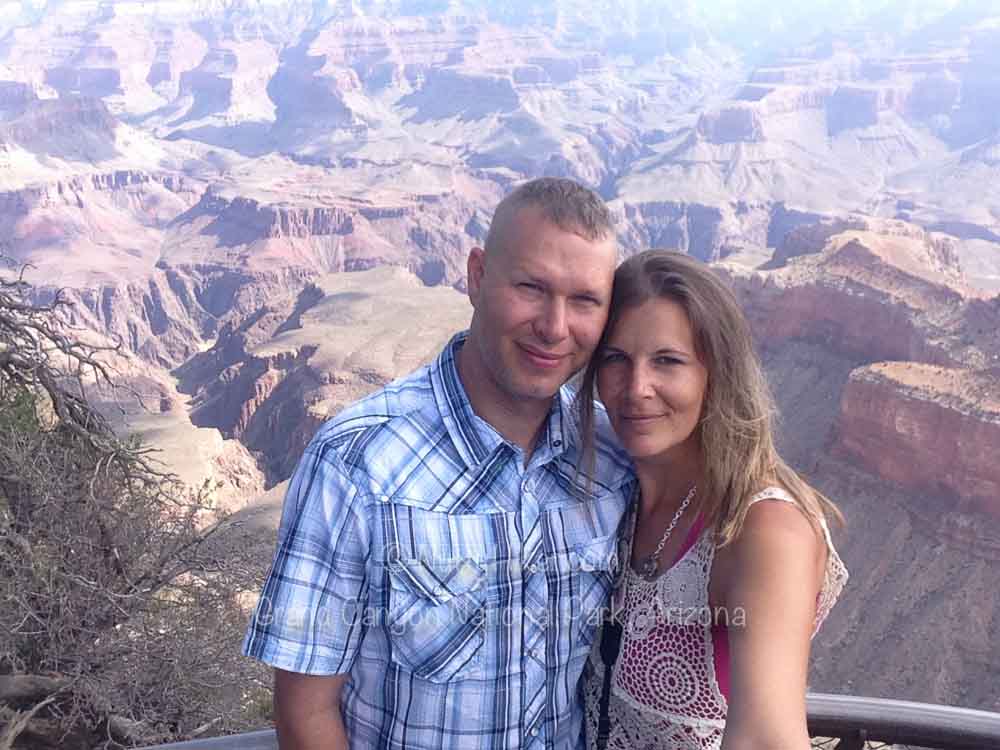
My grandparents took me to the Grand Canyon National Park when I was little. I vaguely remember it. My husband has also been to the Grand Canyon before as a kid. It’s funny how we remember it being much bigger, but I guess everything looks bigger when you are a kid.

When we visited, wildfires were in the area, creating a haze throughout the park. It was still gorgeous, though. We drove the entire length of the south rim. I wish we could have camped out for a couple of days and hiked down to the river. However, we decided that we really needed more than a couple of days and to come back at a later date to camp out for a week.
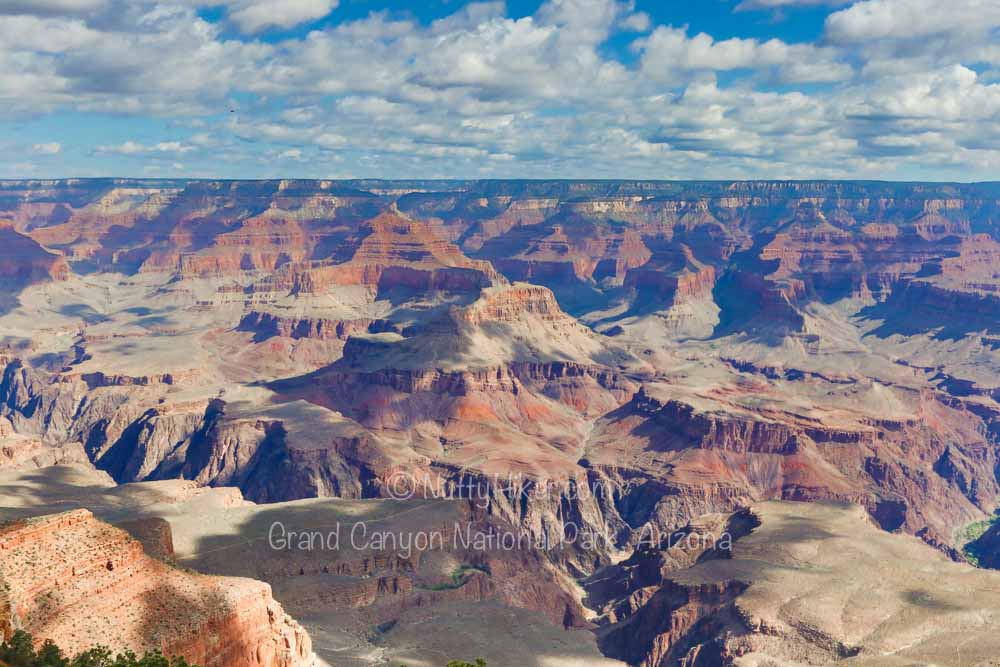
For those that haven’t visited, the canyon is 277 river miles long, up to 18 miles wide, and a mile deep.
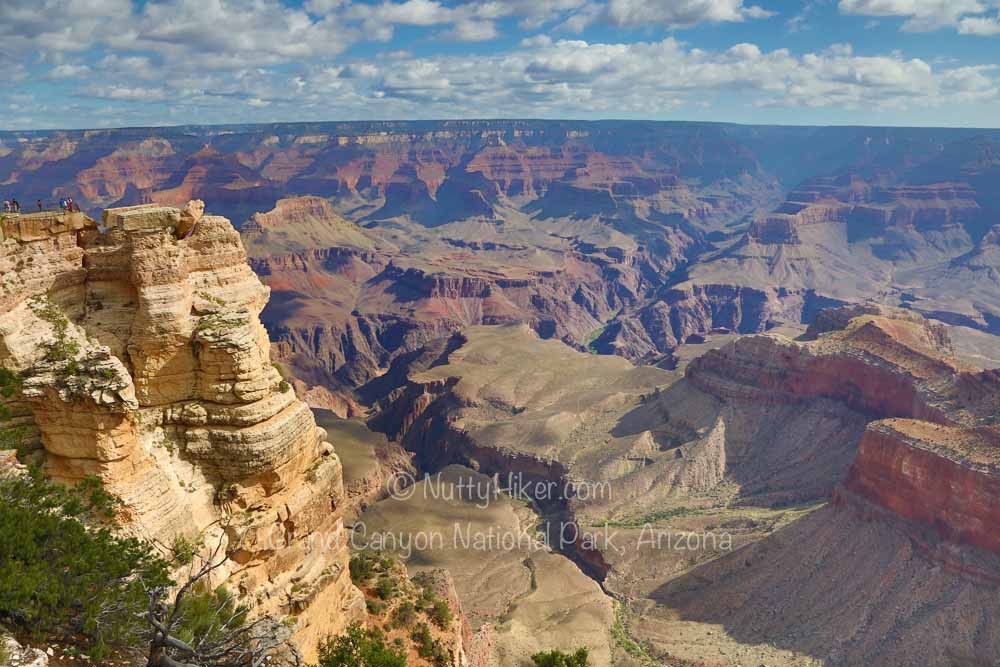
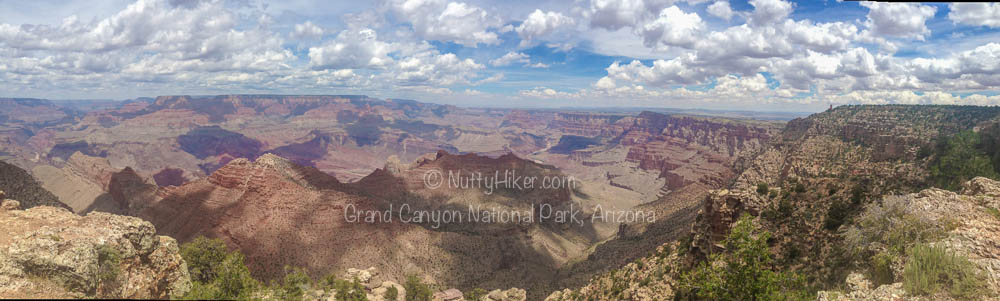
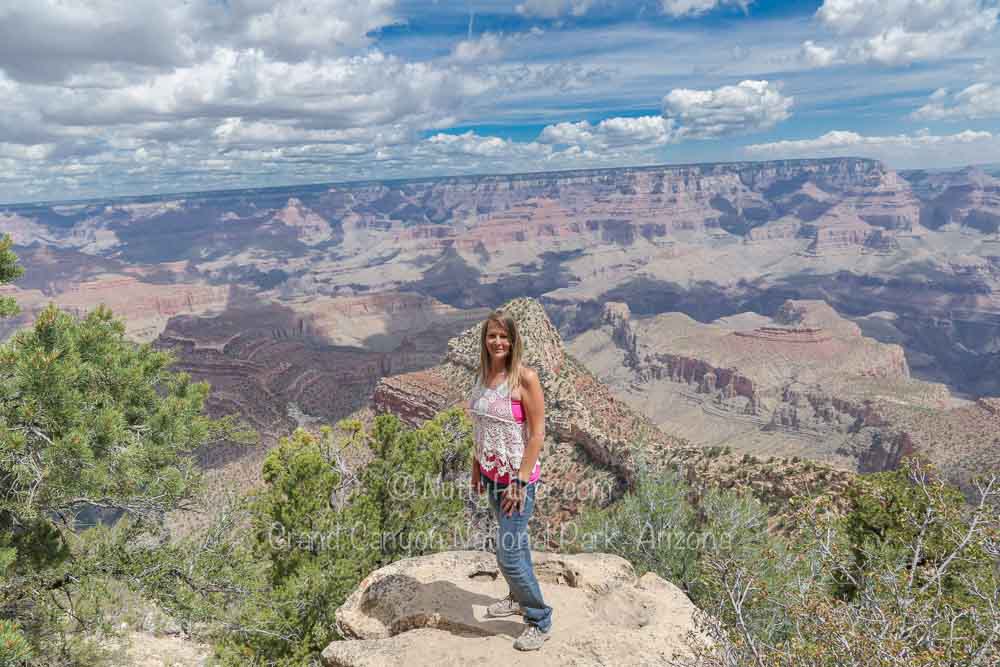
Fun Facts about the Grand Canyon
- The Grand Canyon is around 277 miles long, up to 18 miles wide, and over 1 mile deep.
- It was carved by the Colorado River over millions of years—some rock layers are over 1.8 billion years old!
- The Grand Canyon creates its own weather due to its depth, with temperatures at the bottom often much warmer than the rim.
- It was designated a National Park in 1919 and attracts about 5 million visitors every year.
- The Havasupai Tribe has lived in and around the canyon for centuries and still resides in the Havasupai Indian Reservation.
- You can spot unique wildlife, including over 447 bird species, 91 types of mammals, and 58 species of reptiles.
- The canyon is so large it can be seen from space!
- Explorer John Wesley Powell led the first known expedition down the canyon in 1869 with only wooden boats.
- There’s a secret cave within the canyon walls called the Mystery Cave, known for rare mineral formations.
- The South Rim is open year-round, while the North Rim is only accessible from mid-May to mid-October due to heavy snowfall.
- The Pueblo people considered the Grand Canyon a sacred site and lived in and around its caves for thousands of years.
- Spanish explorers, led by García López de Cárdenas, were the first Europeans to see the Grand Canyon in 1540.
- The Grand Canyon was declared a National Monument by President Theodore Roosevelt in 1908; he was famously passionate about its preservation.
- The first rim-to-rim crossing was made in 1869 by John Wesley Powell, whose mapping expedition faced numerous dangers and lost boats.
- The Grand Canyon Railway, built in 1901, made visiting the canyon much easier for tourists.
- In the 1930s and 1940s, daredevil pilots occasionally attempted flights through the canyon’s tight corridors, often with risky outcomes.
- There’s a post office at the bottom of the Grand Canyon, in the village of Supai; mail is delivered by mules!
- The famous Skywalk at Grand Canyon West juts out 70 feet beyond the rim and has a glass floor for breathtaking (or nerve-wracking) views.
- In 1984, a boulder fell onto the only footbridge across the river, making hiking routes extra adventurous until repairs were made.
- The canyon has a resident population of bighorn sheep who are known for their impressive cliff-climbing skills.
- There’s a running tradition called the “Rim-to-Rim-to-Rim” where ultra-athletes try to run from one rim to the other and back again, over 40 miles!
- An unofficial “Grand Canyon Suite” was composed by Ferde Grofé in 1931, famously capturing the canyon’s dramatic scenery in music.
Tips for Visiting the Grand Canyon
From breathtaking viewpoints to world-famous trails, making the most of your adventure starts with a little preparation. Whether you’re a first-time visitor or a seasoned explorer, these tips will help you experience the canyon safely and comfortably.
Take a selfie stick, preferably one that is also a tripod and has a remote shutter release, such as this one. It works much better than a traditional handheld selfie stick.
Get there early! Lines to get through the gate are notoriously long, especially during peak season.
Pack layers—temperatures can swing dramatically between the rim and the canyon floor, even in summer.
Stay hydrated and bring reusable water bottles; water fill stations are available at visitor centers and trailheads.
Use the free shuttle buses on the South Rim for easy access to viewpoints, trailheads, and parking.
Reserve lodging and campsites well in advance, as accommodations inside the park book up quickly, especially in peak season.
Explore beyond the rim by walking part of the Rim Trail or, for the adventurous, hiking into the canyon on Bright Angel or South Kaibab trails.
Respect wildlife—keep a safe distance from animals like elk and bighorn sheep, and never feed them.
Don’t underestimate the trails—hiking down is easier than hiking back up; plan shorter hikes unless you’re experienced. People die every year in the Grand Canyon due to being unprepared.
Bring sun protection—the high elevation means UV exposure is intense, so wear a hat, sunscreen, and sunglasses.
Check the weather and park alerts before you go. Summer thunderstorms can cause flash floods, and winter can bring snow and ice.
Visit the lesser-known North Rim if you want fewer crowds (open mid-May to mid-October).
Catch a sunrise or sunset—the colors and shadows on the canyon walls are breathtaking during these times.
Attend ranger-led programs to learn more about the canyon’s history, geology, and wildlife from the experts.
Tips for Hiking the Grand Canyon
- Start early to avoid heat and crowds, especially in summer months.
- Know your limits—remember, hiking back up is much harder than going down.
- Carry plenty of water (at least 1 liter per hour for strenuous hikes).
- Pack salty snacks to replenish electrolytes lost while sweating.
- Layer up—weather can change quickly, and temperatures drop as you descend.
- Let someone know your plans and expected return time.
- Wear sturdy, broken-in shoes suited for rugged terrain.
- Pace yourself—turn around before you feel tired.
- Check for trail closures and weather alerts before heading out.
Popular Grand Canyon Trails
- Rim Trail
- Distance: Up to 13 miles (can hike any length, mostly flat)
- Difficulty: Easy
- Highlights: Stretches from South Kaibab Trailhead to Hermit’s Rest. Offers spectacular rim views with multiple shuttle stops.
- Bright Angel Trail
- Distance: 9.5 miles from rim to river (turn around at any point)
- Difficulty: Strenuous
- Highlights: Water at rest houses (seasonal), gradual descent, shaded rest stops, access to Indian Garden (4.5 miles), and Plateau Point (6 miles).
- South Kaibab Trail
- Distance: 6.3 miles from rim to river
- Difficulty: Strenuous
- Highlights: No water available, but offers breathtaking panoramic views. Popular turn-around points: Ooh-Aah Point (0.9 miles), Cedar Ridge (1.5 miles).
- Hermit Trail
- Distance: 8.2 miles to the river
- Difficulty: Very strenuous, rough and less maintained
- Highlights: Fewer crowds, historic stonework, access to Santa Maria Spring (2 miles).
- North Kaibab Trail (North Rim, open seasonally)
- Distance: 14 miles from rim to river
- Difficulty: Very strenuous
- Highlights: Lush riparian areas, access to Ribbon Falls, most direct route to the Colorado River from North Rim.
- Grandview Trail
- Distance: 2.5 miles to Horseshoe Mesa
- Difficulty: Strenuous, steep with exposed drop-offs
- Highlights: Remote history, old mining sites, panoramic views.
- Havasu Falls Trail (outside main park, requires permit)
- Distance: 10 miles one way
- Difficulty: Moderate to strenuous
- Highlights: Descends into Havasu Canyon to turquoise waterfalls and the Havasupai village.
Always remember, the climb out is much harder than the descent. Park rangers recommend hiking no farther than you feel comfortable climbing back up in twice the time it took you to descend!
Grand Canyon Visitor Information
South Rim (Grand Canyon Village)
- Visitor Center Address: 8 South Entrance Road, Grand Canyon Village, AZ 86023
(Mailing: P.O. Box 129, Grand Canyon, AZ 86023) - Phone: (928) 638‑7888
- Visitor Center Hours: Daily, 9 am – 4 pm
- Amenities: Trip planning, exhibits, park store (8 am–6 pm), shuttle bus terminal, theater, restrooms, maps, Junior Ranger booklets, more
- Verkamp’s Visitor Center: Open daily, 8 am – 6 pm
- Backcountry Information Center: Open daily, 8 am–12 pm & 1 pm–5 pm (hiking permits & info)
- South Rim and Desert View Gates: Open 24/7, year-round (some visitor services/hours are seasonal)
North Rim (open seasonally, usually mid-May to mid-October)
- Visitor Center Address: Arizona 67, North Rim, AZ 86052
(located next to the Grand Canyon Lodge) - Phone: (928) 638‑7864
- Visitor Center Hours: Daily, 8 am – 6 pm (seasonal; closed in winter)
- Backcountry Information: Available during visitor center hours
- North Rim Entrance Gate: Generally open mid-May to mid-October, 24 hours/day during open season (closed in winter due to snow)
- Camping/Lodging Reservations: Highly recommended, as facilities on the North Rim are limited and fill quickly
Official Website & Park Contacts
- Website: www.nps.gov/grca
- Public Affairs Office: (928) 638‑7779
- Backcountry Permits Info Line: (928) 638‑7875 (Mon–Fri, 8 am–5 pm)
- Mailing: General Delivery, Grand Canyon, AZ 86023 (Valid ID required for pickup)
Tip: Always check current hours and alerts on the official website before your trip, as hours and access may change due to weather or special events!
Popular posts:








Gray pictures!!!
Wth? Great, not Gray. LOL
I’ve visited the Grand Canyon a few times and it completely leaves me speechless every time! Of all the places I’ve been in the world, this is still my favorite. I haven’t been back since they built that glass walk-over viewpoint bridge and I’d love to experience that too. All the more reason to go back again!
Your photos are stunning! Just as I remember it.
Thanks for sharing,